Pedro Páramo's grief and withdrawal after his wife's death
Pedro PáramoPedro Páramo’s grief and withdrawal after his wife's death transform private loss into a public catastrophe. After Susana San Juan dies, he turns away from the estate and the community that once depended on his authority, while his fixation on her absence culminates in a deliberate starvation of Comala. His sorrow does not restore the intimacy he wanted: he never understands Susana’s inward world, and the image he clings to cannot prevent the ruin that follows.
Love and the Unknowable Susana
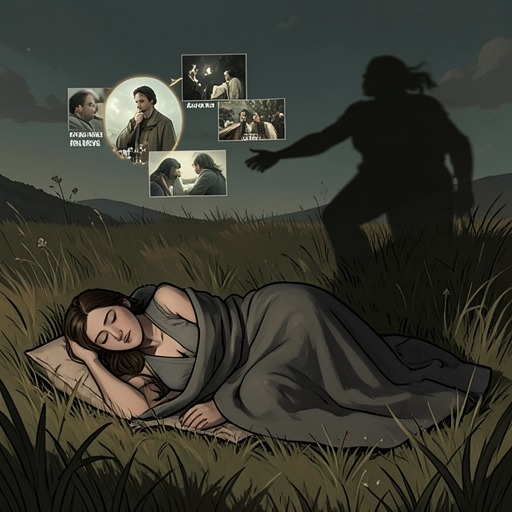
Pedro’s grief is foreshadowed in the sleepless vigil he keeps while Susana is alive. Confined to her room, she spends her nights asleep or pretending to sleep; when she is awake, her body twists restlessly, her face is wet with sweat, and her hands clutch at the sheets and pillow. Pedro watches beside her, distressed by the long, anxious nights and wondering when her condition will end. He cannot tell what torments her from within.
His attachment is absolute in his own understanding. He believes that Susana is the creature he loves above everything in the world, and that her image will let him leave life dazzled, wiping away all other memories. Yet the narration makes the limit of that devotion explicit: Pedro never learns what Susana’s world is. His presence beside her, even his constant watching, cannot bridge the distance between them.
One night, Pedro stands near the door as she moves uneasily through another exhausting dream. The lamp’s oil crackles and its flame dwindles; he wishes that what she suffered were pain rather than these unending dreams, because pain might at least allow him to console her. He leaves quietly. Outside, the night wind seems to detach Susana’s image from him. The scene gives his later withdrawal its emotional shape: he can watch, wait, and preserve an image, but he cannot enter or relieve the experience consuming her.
From Vigil to Withdrawal
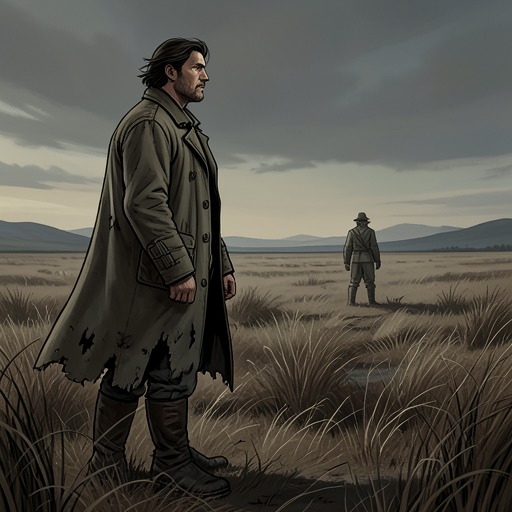
After Susana’s death, an account of Pedro’s behavior describes him slumped in a chair, staring at the road along which she had been carried to the cemetery. He takes no further interest in anything. The stillness is not a brief interval of mourning: Pedro abandons his properties and orders everything they contain burned. People offer differing explanations for his conduct, saying either that he has had enough or that disillusionment has overtaken him; what is certain is that he sends everyone away and remains seated, facing the road.
The contrast with his earlier command of the estate is stark. When its affairs were failing, he demanded to know not simply how much money was owed but to whom. He directed Fulgor Sedano to settle with the Preciado women first, since they were owed the most and had received the least, and ordered him to ask Dolores Preciado for her hand in marriage. Pedro bluntly explained that his declaration of love was for her money. The episode shows a man who had treated debt, marriage, and land as instruments of control. His later abandonment is therefore not the fading of an inconsequential household: it is the withdrawal of the person around whom the estate’s power and obligations had been organized.
That power had once operated on a large scale. During heavy rain, two hundred mounted men ride out through the gate of Media Luna under Fulgor’s direction. Their task is to move cattle from Enmedio beyond Estagua and transfer Estagua’s cattle to the highlands of Vilmayo. The precise dispatch of men and herds makes Pedro’s later refusal to sustain the estate consequential: the same order that once moved labor and livestock across the countryside gives way to land left unattended.
The Estate and Comala in Ruin
The land is soon described as abandoned and ruined, overtaken by pests and disease after being left alone. Comala’s population dwindles. Men disperse in search of other places to live, and departures become so common that those who remain even find it a kind of pleasure to say goodbye. Some leave intending to return, entrusting their possessions and families to others; later, some ask for their families but not their belongings, and eventually appear to forget the village and those they left behind.
The people who stay do so for different reasons. One account remains because there is nowhere else to go; others wait in the hope that Pedro will die and leave them his property. That expectation sustains some for years, but he continues living, like a scarecrow standing over the lands of Media Luna. The Cristeros War brings another blow: the army takes the few men who remain. The speaker says that hunger begins then and that she has not been with anyone since. Pedro’s withdrawal thus extends beyond his own grief, stripping the place of land, population, and the ordinary means by which those left behind might endure.
Revenge and the Meaning of His Grief
The account of the village’s decline places its cause in Pedro’s anguish over Susana’s death. It insists that he loved her unlike any other woman, while also describing the devastation produced by that love once she is gone. The funeral makes the separation visible: Susana is buried at Media Luna, quiet and deserted, while Comala’s funeral bells fail to make the crowd understand that the occasion is one of mourning. The revelry continues as the estate falls silent. Pedro does not leave his room, and he vows revenge on Comala.
He carries out that revenge by folding his arms and letting Comala starve. The act converts grief into a policy: rather than resume the work that might sustain the village, Pedro uses his power through deliberate inaction. His sorrow is real, but its consequences are not confined to him. The abandoned land and departing population have already shown how dependent the community is on the estate; the starvation makes that dependence lethal. Pedro’s vigil at the road ends not in reconciliation with loss, but in a withdrawal that leaves Comala to suffer the material consequences of his refusal to act.